Andean Warfare: New Understanding of Inca Military Technology and Organization
Scholars are reassessing the weapons, armor, and organizational tactics of pre-Columbian Andean armies, finding evidence of sophisticated metallurgy and ethnically diverse fighting units.
Recent examination of archaeological evidence and historical accounts is reshaping understanding of warfare in the Inca Empire and its predecessors, revealing a military apparatus far more complex than previously documented.
Andean armies employed a diverse arsenal. The Inca and earlier Wari culture relied heavily on blunt weapons like maces and slings rather than spears, at least in their heartland regions. Metal weaponry was more prevalent than once thought: copper and bronze maces have been recovered, and historical accounts describe metal-tipped projectiles and spears, particularly in later Inca campaigns in what is now Ecuador. However, surviving artifacts of metal spear tips remain scarce, and some purported examples may be post-colonial in origin.
Armor reflected the region’s textile tradition. Soldiers wore thickly woven cotton garments resembling gambesons, providing substantial protection. Helmets were typically crafted from hardwood or textiles, though bronze examples may have existed; accounts mention visors, but no surviving metal helmets have been identified. High-ranking warriors sometimes wore bronze breastplates and arm protections.
What distinguished Andean military organization was its ethnic composition. The Inca army operated on a radically different principle than contemporary European or Mesoamerican forces. Soldiers were legally required to wear their own culture’s clothing and fight in ethnically organized units, equipped and trained according to their people’s martial specialties. An Inca army fielded diverse equipment and tactics across a single force, comparable to how Roman legions incorporated auxiliary troops with distinct capabilities.
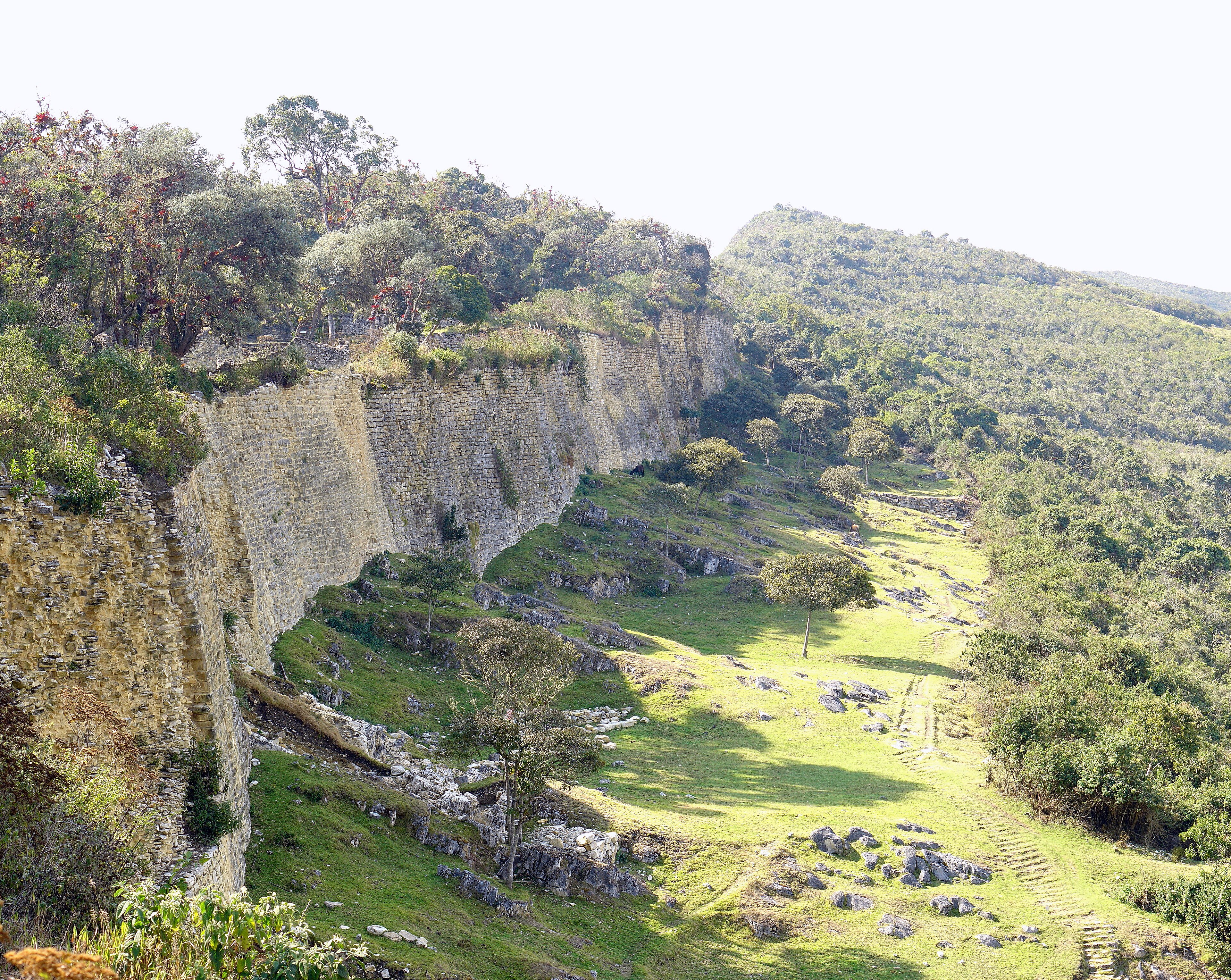
Fortification design was equally sophisticated. The Inca built extensively, with sites like Kuelap featuring walls enclosing six hectares with over one kilometer of fortification and elaborate defensive terracing. Some structures employed double-wall designs reminiscent of Scottish brochs.
Logistical infrastructure supported this military apparatus. Pukaras (fortress-settlements) and kallankas (large garrison structures) often occupied the same locations as tambos (state granaries and storage facilities), suggesting integrated strategic planning for resource management, troop movements, and territorial control.
Scholars are now examining museum collections and academic literature to distinguish between different projectile types, such as arrows versus atlatl darts, and to locate and document lesser-known artifacts housed in various institutions. This ongoing research continues filling gaps in understanding how Andean civilizations achieved their territorial expansion and maintained their vast empire.
← Back to home