The Great Horsepower Debate: Why RPM, Torque, and Gearing Don't Mean What You Think
A fundamental disagreement has erupted over how horsepower, torque, and transmission gearing interact to determine real-world vehicle acceleration.
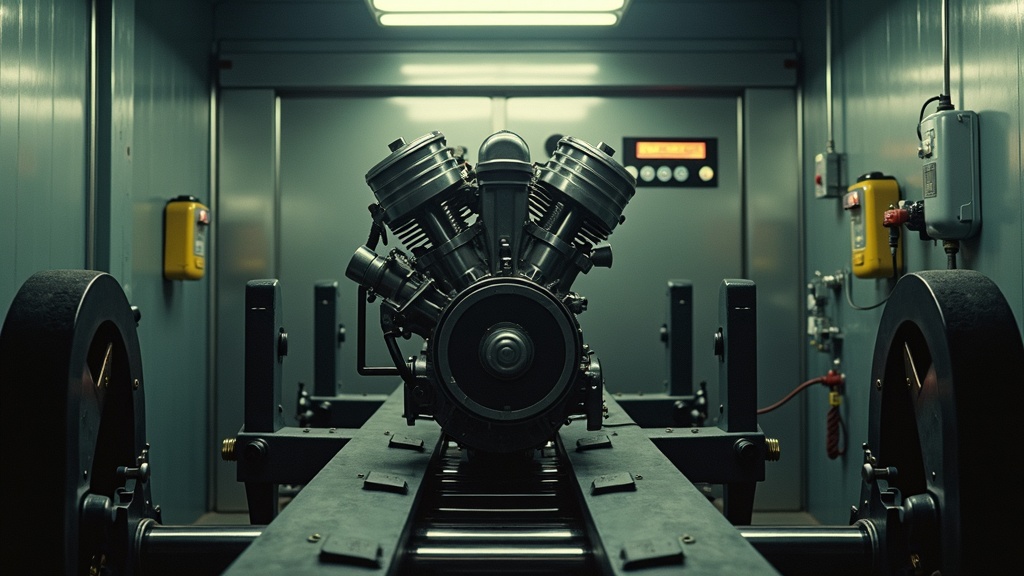
The automotive community is locked in a heated dispute over basic engine physics, specifically how horsepower, torque, and gearing combine to determine acceleration.
The core disagreement centers on what horsepower actually measures and whether it or torque better predicts how quickly a vehicle will accelerate. One camp argues that horsepower, which factors in both torque and RPM, is the more useful metric because it accounts for the number of power strokes delivered per unit of time. At higher RPMs, even with slightly lower instantaneous torque, there are more combustion events happening each second, producing more total work.
The opposing view holds that torque is the fundamental measure of force at the crankshaft, and that horsepower is merely a calculation layered on top of it. This group emphasizes that gearing can multiply torque to achieve any desired acceleration level, making horsepower somewhat redundant once transmission ratios are considered.
A persistent point of contention involves whether two engines with different torque curves but identical peak power can produce identical acceleration. One faction claims that when properly geared to the same road speed, a high-RPM engine making 200 horsepower at 10,000 RPM can deliver the same wheel torque as a low-RPM engine with the same horsepower at 5,000 RPM. The opposition counters that real-world engines never produce identical torque across their entire range, making such theoretical comparisons meaningless.
Dyno testing has become a flashpoint. Dynamometer rollers measure how quickly they are accelerated, and acceleration is directly proportional to the torque being applied. Yet practitioners disagree on what this reveals: does it prove that instantaneous torque governs acceleration, or does it demonstrate that horsepower (a function of torque times RPM) predicts real-world performance better?
The debate also hinges on practical concerns. Transmission gear ratios have physical limits; you cannot gear an engine arbitrarily low without destroying top speed. This means peak power delivery across the RPM range and the shape of power and torque curves matter more than isolated peak figures.
Several contributors have invoked credentials, with at least one claiming mechanical engineering and dyno testing experience. Most others rely on first-principles physics arguments, though interpretations of those principles diverge sharply.
The disagreement shows no signs of resolution, with participants accusing each other of fundamental misunderstandings of work, force, and time.
← Back to home